Expert Tips for Buying Garage Door Accessories in Parker

A garage door usually gets attention only when it stops working. Until then, most homeowners focus on the door panels, the opener, and whether the springs or rollers need service. Accessories tend to feel secondary, almost optional. In practice, the right accessories change how the whole system performs. Garage Door Accessories Parker They improve safety, reduce daily friction, help the door last longer, and make the garage more usable in a place like Parker, where wind, dust, cold snaps, summer heat, and day to day convenience all shape what works and what wears out too fast.
That is why shopping for Garage Door Accessories Parker homeowners actually need should start with the door system you already have, not with whatever looks attractive on a shelf or in a product listing. A smart keypad is great, but not if the opener is nearing the end of its life. Decorative hardware can sharpen curb appeal, but not if the bottom seal is brittle and the garage leaks cold air every winter. The best purchases are rarely the flashiest ones. They are the ones that solve a real problem in your garage.
Start with the door you have, not the accessory you want
One of the most common buying mistakes is choosing accessories before confirming compatibility. Garage doors look simple from the driveway, but the operating systems behind them vary quite a bit. Openers use different frequencies, rails, logic boards, and safety sensor setups. Door sections come in different thicknesses and materials. Track layouts differ. So do spring systems.
A homeowner may see a universal remote advertised online and assume it will pair with any opener. Sometimes it will. Sometimes it will pair only after a tedious setup process. Sometimes it will not pair at all. The same thing happens with replacement keypads, battery backup units, laser parking aids, reinforcement brackets, and weather seal kits. Even small parts, like hinges and rollers, can be a mismatch if the stem length, wheel diameter, or gauge is wrong.
Before you buy anything, check the manufacturer label on the opener and take clear photos of the door, track, hinges, rollers, bottom seal retainer, and safety sensors. That five minute step saves returns, wasted trips, and a lot of frustration. If your system is more than 10 to 15 years old, be especially careful. Older opener models often work fine, but they may not support newer accessories the way current models do.
Parker conditions change what matters
Accessories that perform well in a mild climate do not always hold up the same way in Parker. Even without extreme weather every day, local conditions matter. Dry air can harden lower quality rubber seals faster. Wind can drive dust into tracks and sensors. Temperature swings put extra stress on plastic housings, adhesive backed products, and batteries. If your garage faces west or south, that afternoon heat can shorten the life of remotes left in vehicles and can make certain plastics brittle over time.
This is where material quality becomes more than a sales talking point. A better bottom seal, for example, is not just about a tighter fit. It can help block blowing debris, reduce drafts, and limit water intrusion during storms. Nylon rollers with sealed bearings can be quieter and cleaner than older steel rollers, especially when dust is part of daily life. A keypad with a weather resistant cover may not sound essential until you have dealt with faded buttons or unreliable performance after a season or two outdoors.
When people ask what matters most in Garage Door Accessories Parker homes, my first answer is usually durability under real use, not novelty. Fancy features are fine, but start with components that stand up to the environment.
Safety accessories deserve more attention than they get
A surprising number of accessory purchases should be framed as safety decisions. Photo eye sensors, motion detecting wall controls, battery backups, manual release upgrades, and reinforcement hardware can all affect how safe the system is for children, pets, vehicles, and anyone entering through the garage.
If your opener reverses inconsistently, the issue might not be the opener itself. It could be dirty or misaligned sensors. Replacing aging sensors with compatible new ones is often money better spent than buying convenience add ons first. The same goes for the wall control. Newer control panels can include vacation lock modes, light timers, and motion activated illumination, which sounds minor until you come home with your hands full on a dark evening.
Battery backup is another accessory people postpone until the first outage. In an area where weather or utility interruptions can happen, backup power has practical value. It is not only about getting the car out. It is about avoiding a heavy manual lift when the power is off, especially if the door is oversized or the user has limited mobility.
If your garage door is a wider double door and the top section shows any flex during operation, an opener reinforcement bracket is worth discussing with a technician. It is a modest accessory, but it can prevent strain damage where the opener arm connects to the door. That is the sort of purchase that never looks exciting in a catalog, yet it often pays for itself by preventing bigger repairs.
The accessories most homeowners actually use every day
Some upgrades genuinely improve daily life. The best ones are usually the simplest. Remotes, wireless keypads, smartphone control modules, brighter LED-compatible opener bulbs, Garage Door Accessories Parker parking guides, and improved weather sealing all land in this category.
A good keypad is one of the most practical purchases for families. It eliminates the need to hand out extra remotes and gives kids, dog walkers, or visiting relatives controlled access without sharing house keys. The catch is that not every keypad works equally well in sunlight, cold, or heavy use. Look for buttons with decent tactile response and a cover that protects the pad when not in use. Flush, glossy touch surfaces can look sleek, but they are often less pleasant to use with cold fingers or in bright glare.
Smartphone control has become far more reliable than it used to be, but it still pays to ask one basic question: do you actually need it? If you travel often, receive deliveries in the garage, or regularly wonder whether you left the door open, it can be a strong upgrade. If your opener is already aging and your Wi-Fi signal in the garage is weak, it may turn into one more thing to troubleshoot. Sometimes a traditional keypad plus a quality remote is the cleaner solution.
Parking aids sound almost trivial until you have a tight garage. A simple laser guide or a well placed parking stop can help avoid those little bumper taps that gradually turn into dents in drywall, bent shelving, or a damaged lower door panel. In narrower garages, especially when larger SUVs share the space with storage, that small accessory earns its keep quickly.
Where cheap accessories cost more later
Price matters, but garage door accessories are one of those categories where the least expensive option often carries hidden costs. A bargain remote that burns through batteries, a universal keypad with inconsistent range, or low grade weatherstripping that cracks after one season is not really a deal.
I have seen homeowners buy a generic bottom seal because the width looked close enough, only to discover it slides loose in the retainer or bunches at the corners. That creates gaps, catches debris, and makes the door sound rougher on closing. I have also seen low quality decorative hardware rust prematurely, which leaves a front facing cosmetic issue on a part of the house that is hard to ignore.
That does not mean the premium option is always the right one. It means you should look closely at lifespan, warranty, installation requirements, and whether the accessory solves a recurring problem. A thirty dollar difference means less when the better part lasts years longer and performs consistently.
Here are a few categories where it usually pays to avoid the lowest tier product:
- bottom seals and perimeter weatherstripping
- remotes and wireless keypads
- rollers, hinges, and reinforcement brackets
- battery backup units and power related accessories
- decorative hardware exposed to sun, moisture, and temperature swings
These are not glamorous purchases, but they affect operation, reliability, and appearance in a very visible way.
Decorative upgrades can help, if they fit the architecture
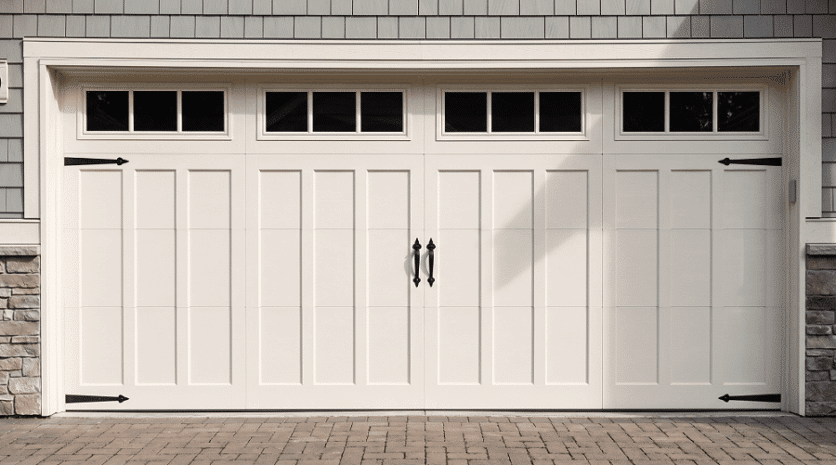
Not every accessory needs to be purely functional. Decorative hardware, faux hinge sets, handle kits, window trim accents, and upgraded lighting around the garage can all improve curb appeal. In Parker, where many neighborhoods have strong visual consistency, the garage door often occupies a large share of the front elevation. Small changes there carry more impact than people expect.
The key is proportion. Carriage style handles on a very contemporary flush panel door can look forced. Oversized strap hinges on a modest suburban door can read as costume rather than design. Matte black hardware can look excellent on light colored doors, but if the finish quality is poor, sun exposure tends to reveal fading and chalking sooner than homeowners expect.
Think of decorative accessories as trim, not transformation. They should support the architecture of the house, the style of the door, and the scale of the opening. If possible, hold the hardware against the door before drilling or attaching anything permanently. Product photos can be misleading, especially when the actual door color, panel pattern, and lighting conditions at your home differ from the listing.
Know when installation is simple and when it is not
Some garage door accessories are reasonable DIY projects. Others should not be treated casually. Swapping a remote, adding a keypad, installing a parking guide, or replacing a battery in a backup system can be straightforward. Replacing rollers, hinges, top fixtures, bottom brackets, cables, or anything near spring tension is a different conversation.
The danger is not always obvious. A homeowner may assume that changing worn rollers is simple because the part itself looks small. But depending on the roller position and the door setup, the work can bring hands uncomfortably close to tensioned components. The same caution applies to bottom seal replacement if the retainer is bent, corroded, or mounted in a way that forces awkward handling of the door.
A good rule is this: if the accessory touches the spring system, cable system, or structural operation of the door, get professional help unless you are specifically trained and equipped for it. A service call costs less than an injury or a damaged door.
Ask better questions before you buy
Shoppers often ask, “What is the best accessory?” The better question is, “What problem am I trying to solve?” Once you answer that, the field narrows fast.
If your garage is noisy, the answer may be rollers, vibration isolation, or opener lighting changes that reduce the temptation to slam the door manually. If the issue is drafts, start with seals and panel condition. If access is the problem, compare keypads, remotes, and smart controls. If the concern is security, focus on rolling code compatibility, lock features, and activity alerts rather than decorative add ons.
When buying from a local supplier or garage door company, it helps to ask a few direct questions:
- Is this accessory fully compatible with my opener and door model?
- How does it hold up in outdoor exposure and temperature swings?
- Is installation truly homeowner friendly, or do you recommend service?
- What typically fails first on this product?
- If this does not solve my issue, what would you check next?
Those questions tend to get more honest answers than asking for the “top rated” option.
Why local expertise matters in Parker
Online shopping makes everything look universal. Garage door systems are not universal. Local providers who regularly work in Parker homes see patterns that a national product page cannot. They know which seal profiles fit common door setups in the area, which keypad models hold up better in sun exposure, and which smart modules generate the fewest callback issues on existing opener brands.
That kind of experience matters most when your garage has quirks. Maybe the floor is slightly uneven, which affects seal performance. Maybe the door faces strong prevailing wind. Maybe the opener sits in a detached garage with marginal Wi-Fi coverage. Maybe a previous owner mixed hardware from different brands over time. None of those situations are rare, but they change what accessory will work well.
This is also why it can be worth bringing measurements and photos into a local showroom or service counter instead of guessing from memory. A one inch difference in track spacing or retainer style can turn a quick upgrade into a return cycle.
Budgeting without underbuying
A sensible accessory budget usually follows use and urgency. If the garage is your main entrance, accessories tied to access, safety, and sealing should come first. Decorative items can wait. If the door operates only a few times a week, the urgency may be lower, but the same prioritization still applies.
For many homes, the smartest first round of spending goes toward correcting weaknesses rather than adding features. A new keypad and two remotes will not feel like a major upgrade if the door still rattles, leaks air, and hesitates on closing. On the other hand, a properly sealing, reliably operating door often makes even simple accessories feel better because the whole system works as it should.
I usually suggest homeowners divide purchases into three buckets: must fix, should improve, and nice to have. A cracked bottom seal or failing sensor belongs in the first bucket. A parking guide or brighter opener lighting lands in the second. Decorative magnetic hardware probably belongs in the third. That kind of sequencing keeps the budget tied to function.
Common accessory pairings that work well together
Some accessories deliver more value when purchased as a group rather than one at a time. A keypad pairs well with a new remote if a family is outgrowing a single access method. New weatherstripping pairs well with a garage floor threshold if minor water intrusion is the recurring complaint. Quieter rollers often pair nicely with opener vibration isolation when noise reduction is the goal.
Likewise, if you are replacing an aging opener, that is often the best time to reassess all the supporting accessories. New opener installations are ideal moments to update keypads, remotes, backup power, and wall controls because compatibility questions get resolved in one step. Trying to patch together old and new components over several years can work, but it often costs more in trial and error.
Small details that separate a good purchase from a regrettable one
There are a few details buyers routinely overlook. Battery type is one. If a remote or keypad uses a less common battery, future replacement becomes a nuisance. Mounting method is another. Adhesive backed accessories may seem easier at first, but temperature swings and dust can make them unreliable over time. Visibility matters too. Backlit keypads and clearly labeled buttons make a difference in real use.
Warranty terms deserve a quick read. Many accessory warranties are limited in ways consumers do not notice until there is a problem. “Limited lifetime” can exclude weathering, finish issues, labor, or batteries. That does not make the warranty bad, but it does mean you should know what you are actually buying.
Packaging can even tell you something. If protective gaskets, mounting templates, hardware, and instructions are all clearly organized, that usually reflects a manufacturer that understands installation realities. Sloppy packaging often signals a product built to hit a price point rather than deliver a good ownership experience.
The best buying mindset
The most successful accessory purchases come from homeowners who think like maintainers, not just shoppers. They do not ask only what looks good today. They ask what will still work smoothly after a dusty summer, a freezing morning, and hundreds of opening cycles. They look at the garage as a system. They understand that convenience, safety, security, and durability overlap.
If you are comparing Garage Door Accessories Parker stores or service providers offer, slow down enough to match the product to the problem. Measure carefully. Confirm compatibility. Be honest about what you will install yourself and what you will not. Spend where performance matters. Skip gimmicks that do not solve anything in your space.
That approach is less exciting than impulse buying the latest gadget, but it tends to produce the result homeowners actually want: a garage door that works reliably, feels easier to live with, and causes fewer headaches over time.
Select Garage Doors
11479 Pine Dr
Parker, CO 80134, United States
Phone: (303) 228-0018
FAQ About Garage Door Accessories Parker
Where can I find garage door accessories?
Garage door accessories are available from garage door service companies, authorized dealers, home improvement stores, and specialist suppliers. Select Garage Doors supplies and installs accessories for homeowners in Parker, including compatible remotes, wireless keypads, weather seals, and smart controls. Check your opener model and door specifications before choosing a replacement or upgrade.
How to make a garage door more attractive?
Cleaning the door, refreshing a manufacturer-approved finish, and choosing coordinated decorative handles or hinge accents can improve its appearance. Compatible window inserts may also change the look of an existing window section. Match accessories to the door material and style, and make sure added hardware does not interfere with movement, seals, or safety equipment.
Where can I buy garage door inserts?
Decorative window inserts can be sourced through the door manufacturer, an authorized garage door dealer, or a supplier that carries parts for your specific door series. Match the model, window frame dimensions, and attachment system; inserts are not universally interchangeable. Ask a professional to confirm compatibility before ordering, especially if the work involves glass or changes to a door section.